
Introduction
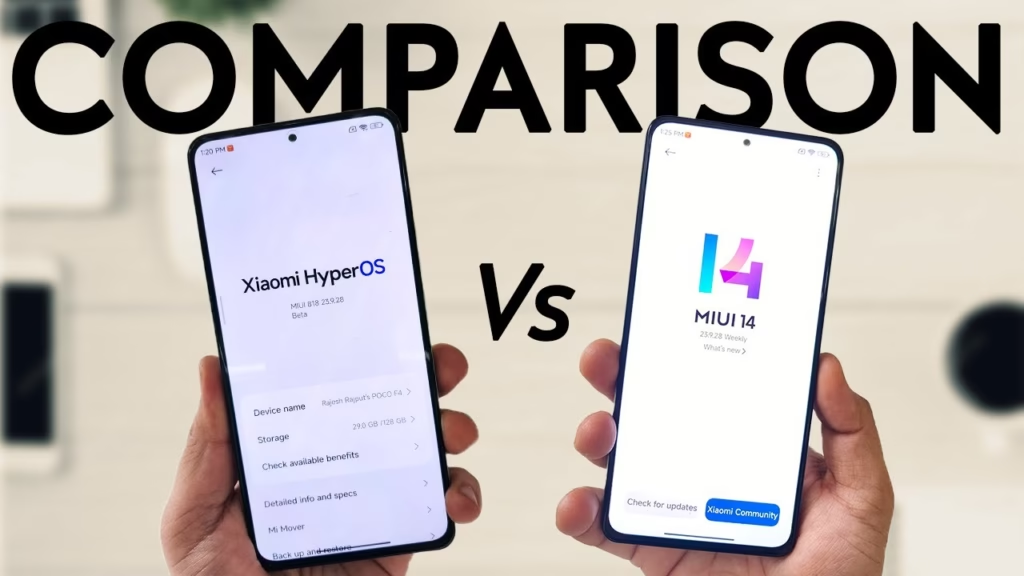
Discover the key differences between Xiaomi HyperOS vs MIUI. Learn how HyperOS offers faster performance, better battery life, improved privacy, and stronger device connectivity compared to MIUI.
Recently, Xiaomi introduced HyperOS, a new operating system that is gradually replacing MIUI. For many years, MIUI powered millions of Xiaomi and Redmi smartphones. However, as technology evolved, MIUI started feeling heavy for some users.
https://www.mi.com/global/news
Therefore, Xiaomi decided to build a lighter, faster, and more connected system. Compared to MIUI, HyperOS focuses on better performance, smoother animations, stronger privacy, and seamless device connectivity. In this comparison, we will clearly explain what’s new in HyperOS, how it is different from MIUI, and which one is better for users.
What Is MIUI?
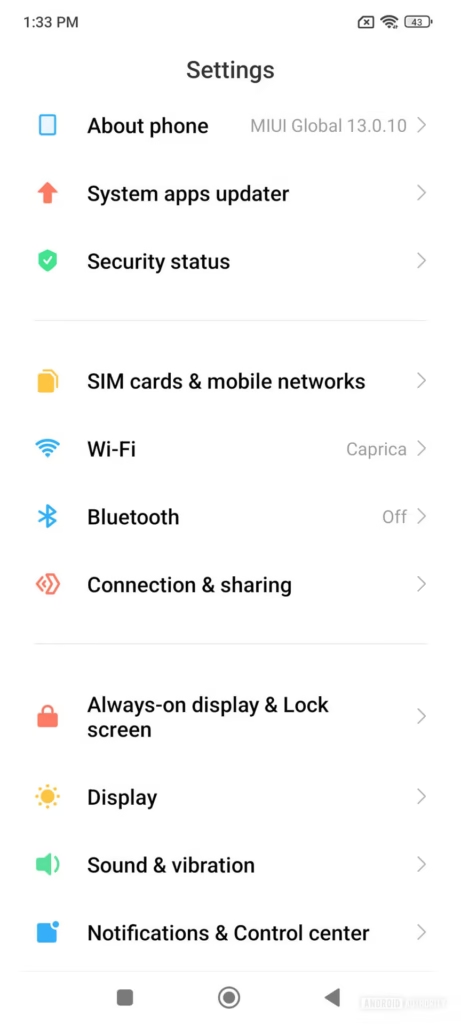
MIUI is Xiaomi’s custom Android-based interface that has been used for many years. It offers deep customization, extra features, and useful tools. However, over time, MIUI became heavier due to too many built-in features and apps.
What Is Xiaomi HyperOS?
Xiaomi HyperOS is a next-generation operating system designed to replace MIUI. It is built to be lightweight and optimized. Most importantly, HyperOS connects smartphones, tablets, smart TVs, wearables, and smart home devices into one ecosystem.
Xiaomi HyperOS vs MIUI: Key Differences
Performance and Speed
First of all, performance is where HyperOS clearly performs better. MIUI works well, but it can slow down on older devices.
In contrast, HyperOS uses fewer system resources. As a result, apps open faster, multitasking is smoother, and overall performance feels more responsive.
User Interface and Design
MIUI offers many customization options. However, its interface can sometimes feel cluttered.
On the other hand, HyperOS comes with a cleaner and more modern design. Animations are smoother, transitions are better, and the overall experience feels more polished.
Battery Optimization
MIUI has decent battery performance, but background apps often consume power.
Meanwhile, HyperOS improves battery efficiency by managing background activity more intelligently. Therefore, users can enjoy longer battery life during daily use.
Ecosystem and Device Connectivity
MIUI mainly focuses on smartphones, with limited ecosystem support.
However, HyperOS is built for multiple devices. It allows easy connection between phones, tablets, TVs, and IoT devices. This makes controlling and sharing data much simpler.
Privacy and Security
MIUI provides basic privacy controls, but they are not always easy to manage.
With HyperOS, privacy settings are clearer and more transparent. Users get better control over app permissions and personal data.
HyperOS vs MIUI: Comparison Table
| Feature | MIUI | HyperOS |
|---|---|---|
| System Size | Heavy | Lightweight |
| Performance | Good | Faster |
| UI Design | Feature-rich | Clean & Modern |
| Battery Life | Average | Better Optimized |
| Ecosystem Support | Limited | Advanced |
| Privacy | Basic | Improved |
Final Verdict: Which One Is Better?
Overall, Xiaomi HyperOS is a major upgrade over MIUI. It is faster, smoother, and better prepared for future technology. While MIUI served users well for years, HyperOS offers a more efficient and connected experience.
Therefore, if your Xiaomi device supports HyperOS, updating is definitely worth it. “Smartphones vs AI Glasses: The New Tech Battle”
Thanks for telling me the difference between Xiaomi HyperOS vs MIUI..I want to buy mobile so it makes me easy to choose any one from it so thank u so much.