Introduction
Tata Motors, one of India’s largest automobile companies, has announced a major corporate move — a demerger. The company will split into two independent listed entities to focus on their growing businesses more effectively.
This blog explains why the demerger is happening, what it means for shareholders, and how it impacts your investment portfolio.Top 5 Emerging Technologies That Will Shape 2026
What Is the Tata Motors Demerger?
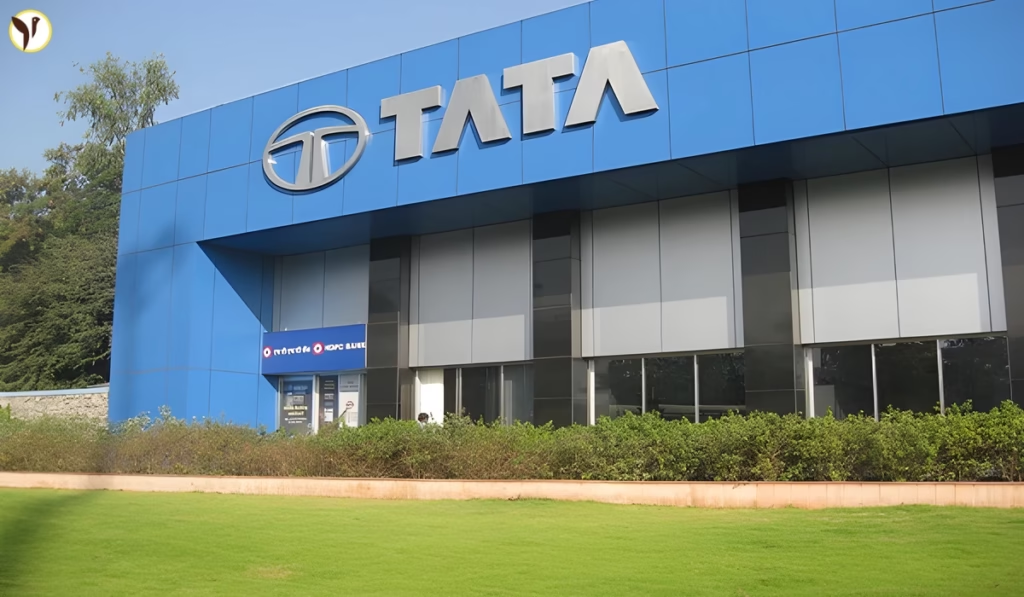
In October 2025, Tata Motors began separating its operations into two parts:
- TML Commercial Vehicles Ltd (TMLCV) – responsible for trucks, buses, and other commercial vehicles.
- Tata Motors Passenger Vehicles Ltd (TMPVL) – handling passenger vehicles, electric vehicles (EVs), and Jaguar Land Rover (JLR).
Both companies will operate independently under the Tata Group umbrella.
The record date for this demerger is October 14, 2025. Shareholders holding Tata Motors shares on this date will receive shares in the new CV company.
Why Is Tata Motors Splitting?
The demerger aims to unlock value and provide each business with a clear strategic focus.
- Commercial Vehicle (CV) Segment: Focuses on logistics, transport, and large fleets.
- Passenger Vehicle (PV) and EV Segment: Emphasizes innovation, design, and consumer demand.
By separating these segments, Tata Motors can:
- Make faster decisions
- Allocate investments more efficiently
- Improve overall business performance
What Happens to Shareholders?
If you hold Tata Motors shares:
- You will receive 1 share of TMLCV for every 1 Tata Motors share you own.
- This means you now hold shares in both companies, giving you a stake in both the commercial and passenger vehicle businesses.
For investors, this opens new opportunities to focus investments on the segment they prefer.
Benefits of the Demerger
- More Focused Growth: Each company can plan its own strategies and growth path.
- Better Investment Opportunities: Investors can choose between CV or PV/EV businesses.
- Improved Efficiency: Independent operations reduce overlap and improve management.
- Stronger Innovation: PV and JLR businesses can focus on technology upgrades and global expansion.
Impact on the Market
Ahead of the demerger, Tata Motors’ stock experienced some short-term volatility. Experts note that:
- Investors are adjusting to the change
- Long-term, the split is expected to enhance growth for both companies
- It may attract more investment due to clearer business focus
Conclusion
The Tata Motors demerger 2025 is a milestone for the Indian auto industry. With independent leadership, both the CV and PV + EV + JLR businesses are poised for faster growth.Simple Time Management Tips to Boost Student Success