
The global automobile industry is going through a major transformation. As climate change concerns and rising fuel costs push the world toward cleaner alternatives, two strong contenders have emerged: Electric Vehicles (EVs) and Hydrogen Fuel Cell Vehicles (HFCVs).How to Secure Your Online Data: Tips for Beginners
While electric cars are already widely available and growing in popularity, hydrogen-powered cars are slowly gaining attention. But the big question remains: which one will dominate the future of transportation?
In this blog, we will compare electric cars and hydrogen cars, analyze their advantages and disadvantages, and understand which technology is more likely to lead the sustainable mobility revolution.
Electric Cars: The Current Leader
How Do Electric Cars Work?
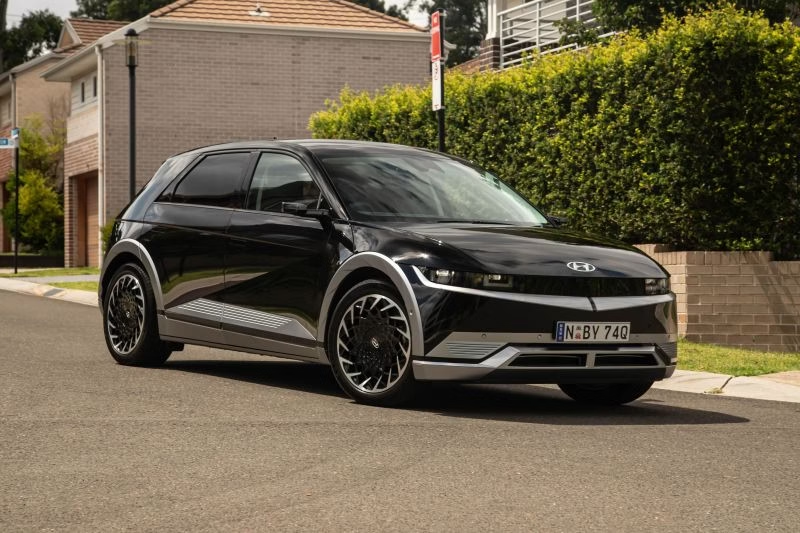
Electric vehicles run on rechargeable lithium-ion batteries. These batteries store electricity and power an electric motor to move the vehicle.
Advantages of Electric Cars
- Zero tailpipe emissions
- Lower running costs compared to petrol or diesel cars
- Growing charging infrastructure worldwide
- Government subsidies, tax benefits, and incentives in many countries
- Smooth and quiet driving experience
Challenges of Electric Cars
- Charging time can be long (30 minutes to 8 hours depending on the charger)
- Driving range is limited (average 300–500 km, though improving)
- Battery degradation over time, replacement costs can be high
- Increased demand for electricity can put pressure on power grids
Hydrogen Cars: The New Challenger
How Do Hydrogen Cars Work?
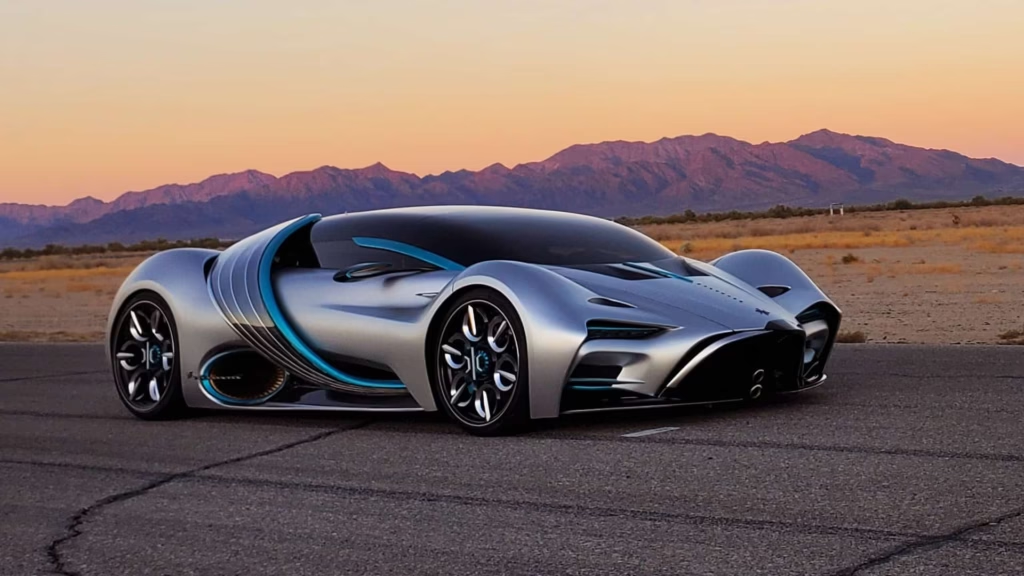
Hydrogen fuel cell vehicles store hydrogen in a tank. The fuel cell combines hydrogen with oxygen to generate electricity, which powers the motor. The only emission is water vapor, making it one of the cleanest energy technologies.
Advantages of Hydrogen Cars
- Refueling takes only 5–10 minutes, similar to petrol cars
- Longer driving range (typically 500–700 km)
- Lightweight fuel cells make them suitable for heavy-duty transport
- Eco-friendly with water vapor as the byproduct
Challenges of Hydrogen Cars
- High cost of hydrogen production, especially if made from fossil fuels
- Storage and transportation of hydrogen is difficult and expensive
- Very few hydrogen refueling stations worldwide
- Vehicles are still expensive due to high fuel cell technology costs
Electric Cars vs Hydrogen Cars: A Comparison
| Feature | Electric Cars | Hydrogen Cars |
|---|---|---|
| Technology | Lithium-ion battery powered | Hydrogen fuel cell powered |
| Driving Range | 300–500 km | 500–700 km |
| Refueling/Charging | 30 min–8 hrs | 5–10 minutes |
| Infrastructure | Expanding rapidly | Very limited |
| Running Cost | Cheaper (electricity-based) | Higher (hydrogen expensive) |
| Eco-Friendliness | High (depends on electricity source) | High (depends on hydrogen production method) |
| Best Use Case | Cars, bikes, small vehicles | Trucks, buses, long-haul transport |
Environmental Impact
Electric Cars
- Pros: Zero emissions at the tailpipe, reduced oil dependency.
- Cons: Battery production requires mining of rare earth metals such as lithium and cobalt, which can harm the environment if not done sustainably.
Hydrogen Cars
- Pros: Water vapor is the only byproduct, making it highly eco-friendly.
- Cons: Most hydrogen today is produced from fossil fuels (known as grey hydrogen), which creates carbon emissions. Green hydrogen, produced using renewable energy, is the ideal solution but still costly.
Cost Analysis
- Electric Cars: Prices are steadily decreasing as battery technology improves. Many governments also offer subsidies. Maintenance costs are lower compared to petrol or diesel vehicles.
- Hydrogen Cars: Still very expensive due to limited production. Running costs remain high because hydrogen refueling stations are rare and fuel itself is costly.
Use Cases: Where Each Technology Fits
- Electric Cars: Ideal for personal vehicles, urban commuting, and short-to-medium distances. Widely suited for households and individuals.
- Hydrogen Cars: Better for heavy-duty vehicles such as trucks, buses, ships, and potentially airplanes. Their longer range and faster refueling make them practical for long-distance travel.
Global Adoption
- Electric Cars: Adoption is growing rapidly in countries like Norway, China, the United States, and India. Companies such as Tesla, BYD, Hyundai, and Tata are making EVs more affordable and accessible.
- Hydrogen Cars: Japan and South Korea are leading the push for hydrogen vehicles, but adoption is still limited. Only a few models, such as the Toyota Mirai and Hyundai Nexo, are available in select markets.
The Future of Transportation – Who Will Win?
- Short-term (Next 10 Years): Electric cars are expected to dominate due to affordability, government incentives, and rapidly expanding charging networks.
- Long-term (20+ Years): Hydrogen cars could become more popular in industries that require heavy-duty, long-range transport, such as trucks, ships, and aviation.
The reality is that the future will not be electric versus hydrogen but rather a combination of both technologies. Electric vehicles will power everyday commuting, while hydrogen fuel cells may take the lead in commercial and industrial transport.
Conclusion
The future of mobility is shifting toward sustainable and eco-friendly options. Electric cars are currently leading the market, but hydrogen fuel cell vehicles have the potential to complement them in specific sectors.
Both technologies will play an important role in reducing our dependence on fossil fuels and cutting global carbon emissions. Instead of asking which will win, the better question is how both can work together to shape a cleaner, smarter, and more sustainable future of transportation.